Accident Audit
After an accident, the damage recorded once, with nothing missed
After a collision, the damage is surveyed under pressure, and the repair scope and cost are argued from photographs on phones.
What SmartFleet does
Optional expert review: crashworthiness assessment
Give us the crash data and the damage survey. Our reviewing engineer reconstructs the impact, assesses each structural zone on its own plate of the same record, and marks the items the review clears. What the survey had down for replacement but the load path shows is within limits comes off the claim, with the verdict and the report signed beside the damage.
What the review delivers
Why the review avoids unnecessary strip-down
After a collision the survey sees the outside. A bent buffer beam may or may not have passed its load into the headstock, the solebars and the body behind it. Without evidence the safe answer is to strip: buffers off, coupler out, the headstock opened up and inspected, often replaced. Weeks of downtime, much of it to find nothing.
The review works the other way round. From the speed, the masses and the geometry it reconstructs the energy of the impact and follows it through the structure, zone by zone. Where the force stayed below the yield point of a zone, that zone sprang back: there is nothing to find there, and nothing to strip. The stripping stops at the last zone that yielded.
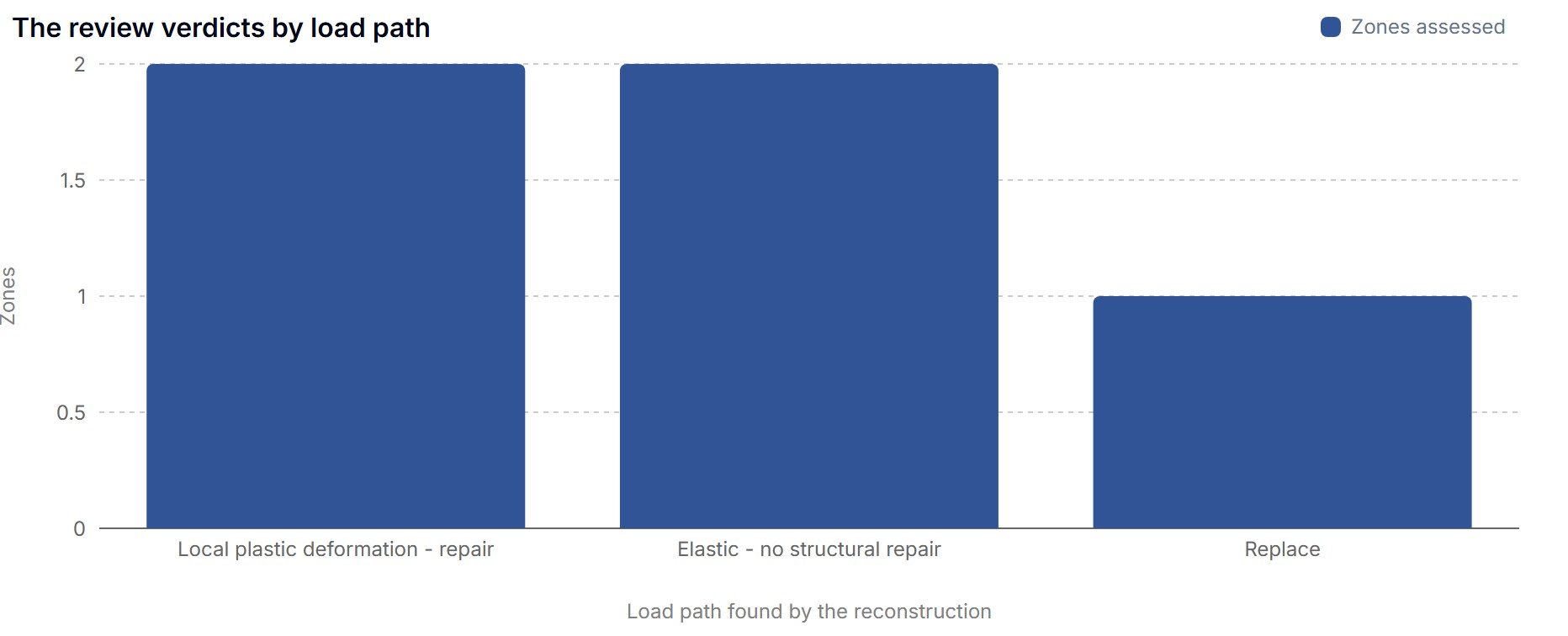
Each zone gets one of three verdicts, signed beside the damage item:
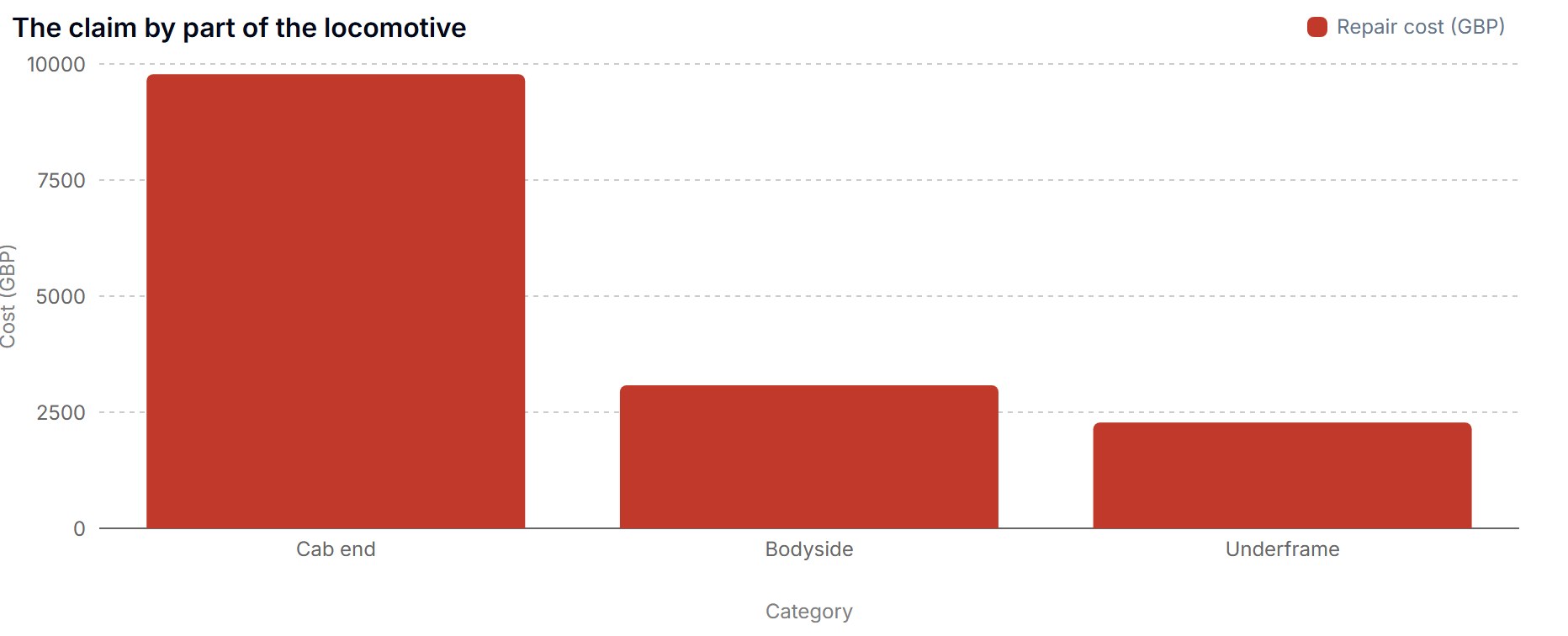
In our demonstration a locomotive struck a trailer at a level crossing at about 25 mph. The buffer beam bent 14 mm and yielded locally, so it is straightened and re-welded, not replaced. The headstock behind it stayed below yield everywhere, so the two buffers the survey had down for replacement are cleared and their heads straightened. The cab structure stayed elastic. Only the cracked windscreen is replaced. Five zones assessed, one replacement, no strip-down of the headstock.
From our demonstration
Experienced engineers do this work with AI assistants, and a person signs every verdict. How it is done.
Your specification, running live.
Send us one of your maintenance specifications, procedures or checklists, or the engineering problem you want solved, and we'll show it to you working in SmartFleet: your tasks, your limits, your signatures.
Send us your specification